

CARIAD | Volkswagen
Developer Portal
From a 100-user side project to the operational backbone of software development across the Volkswagen Group.
6,500 + Engineers Impacted • 14 → 2 Day Onboarding • $2.3 Million Saved • 9 Month Project
THE ORGANIZATION
Overview
The Developer Experience Portal (DXP) is an internal platform developed for CARIAD. It centralizes the tools, documentation, and resources required to build vehicle software, creating a unified environment that supports development across Volkswagen, Audi, Porsche, and every brand in The Volkswagen Group. What began as a small local tool built by a three-person UX team in Redmond became the standard for how CARIAD builds software worldwide.
Lead UX Designer • 2 Designers • 3 Developers • 9-month project

What did the data tell us?
“The workflow to establish a connection between the cloud backend and a vehicle is a drawn-out, convoluted process that takes development teams over 30 workdays to complete.”
The Problem
A fragmented ecosystem at the center of every workflow.
Before the redesign, building vehicle software at CARIAD meant navigating a landscape with no coherent experience holding it together. Tools were scattered across systems, documentation was unreliable, and there were no API standards to speak of. For engineers working across Volkswagen, Audi, and Porsche, even routine tasks required specialized knowledge of vehicle, backend, infrastructure, and testing environments, knowledge that lived in silos, not systems. The result was development that was slow, error-prone, and nearly impossible to onboard into quickly.
Engineers weren't blocked on their code. They were blocked on their environment.

26
Separate tool logins per developer
14 days
Average onboarding, new hire
to first commit
8 portals
Disconnected internal tools in Wolfsburg alone
7 countries
Engineering teams that needed one platform
*Figures based on internal CARIAD research and stakeholder interviews.
CONSTRAINTS THAT SHAPED EVERYTHING
We were building for a global team from a single timezone
The engineering base was split between Redmond, WA and Wolfsburg, Germany; a 9-hour time difference. Every research session, stakeholder review, and design critique had to be scheduled around windows that worked for both continents. Requirements were gathered asynchronously with German partners. Stakeholder interviews were conducted over video. Workshop synthesis happened without a shared room. Finding the right contacts took time the project didn't have. Once we had them, we protected every minute of access.
CONSTRAINT
Cross-continental team. All research and alignment conducted remotely across the U.S. and Germany with no shared on-site time.
WHAT I'D DO DIFFERENTLY
I would have pushed formally for a dedicated on-site sprint in Wolfsburg earlier in the process. A single week in-person would have compressed months of async context-building into days.
My Role & Approach
As Lead UX Designer, I defined the UX strategy, led a three-person design team across two continents, and drove the research that shaped every major product decision. I mapped the information architecture, ran usability testing sessions in the U.S. and Germany, built the design system, and managed stakeholder alignment from individual contributors up to senior leadership. I also led the component library build and ran twice-weekly handoff sessions with development teams in India and Mexico to ensure design intent carried through to production.
FROM INSIGHT TO DECISION
Developers were losing time before they ever wrote a line of code
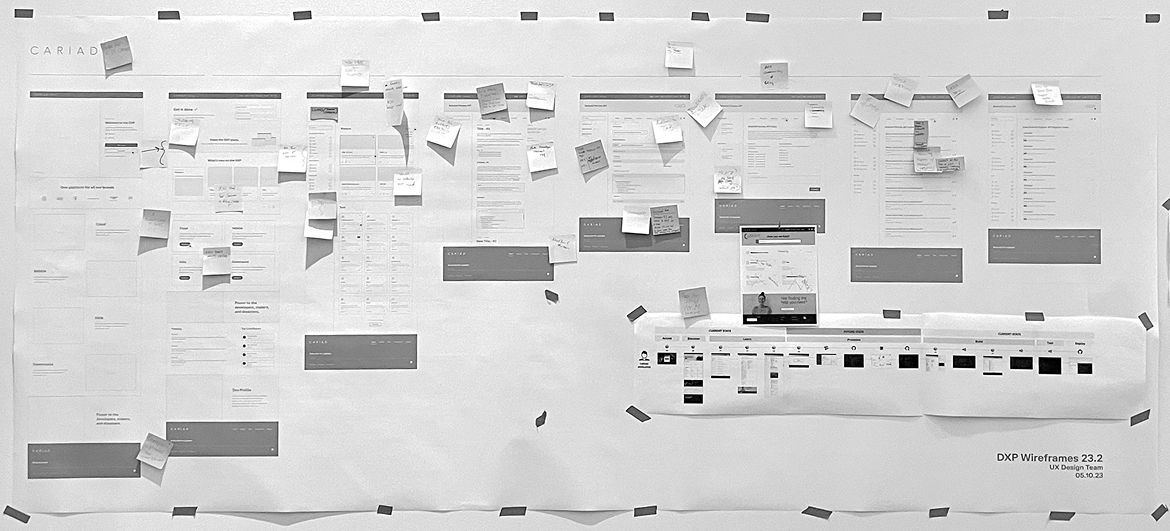
To understand exactly where and why, I ran a discovery sprint combining developer interviews with journey mapping across core workflows. Three friction points emerged consistently: poor discoverability, overwhelming documentation, and no clear entry point. Together they pointed to a single underlying problem: the platform had no coherent experience holding it together.
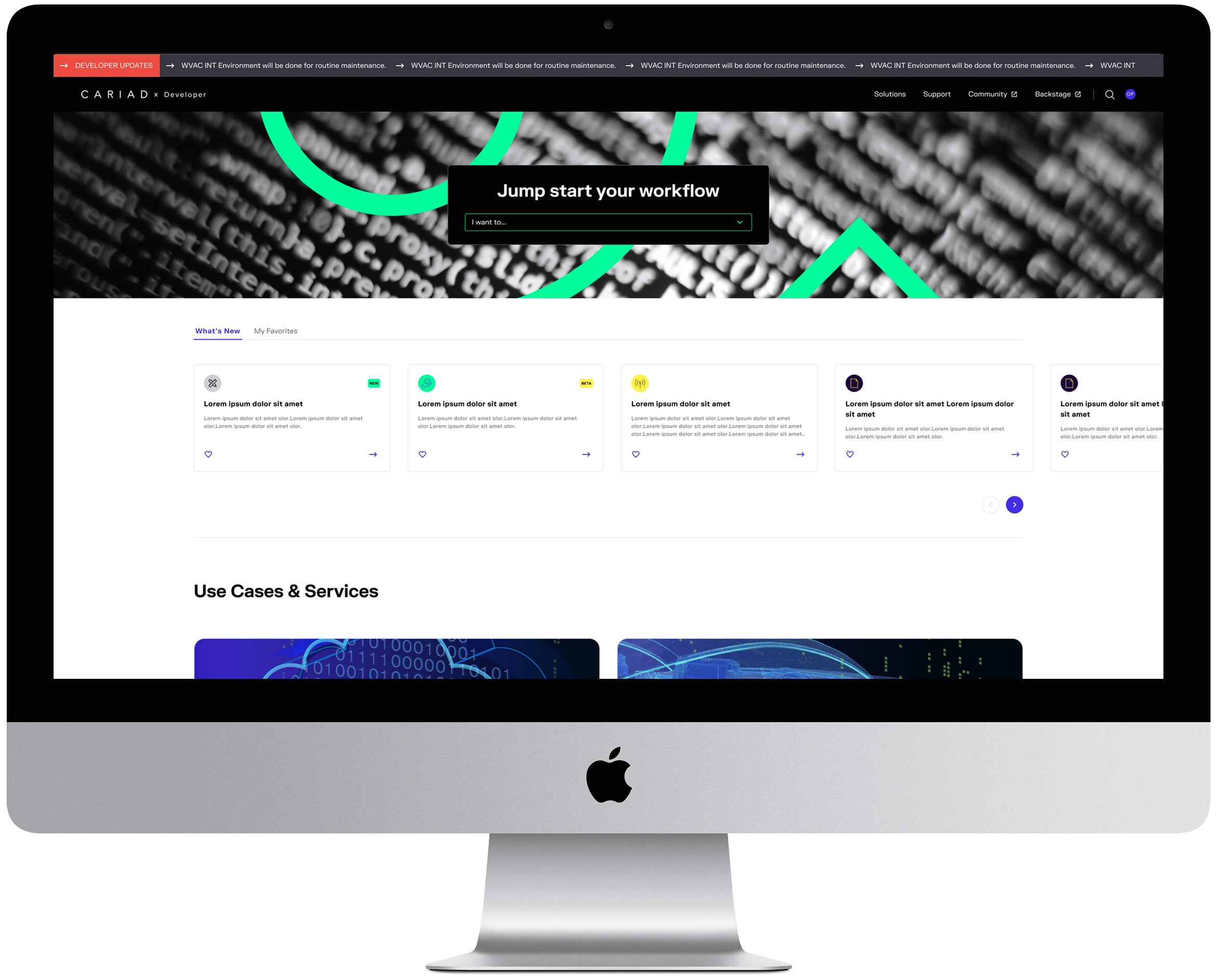
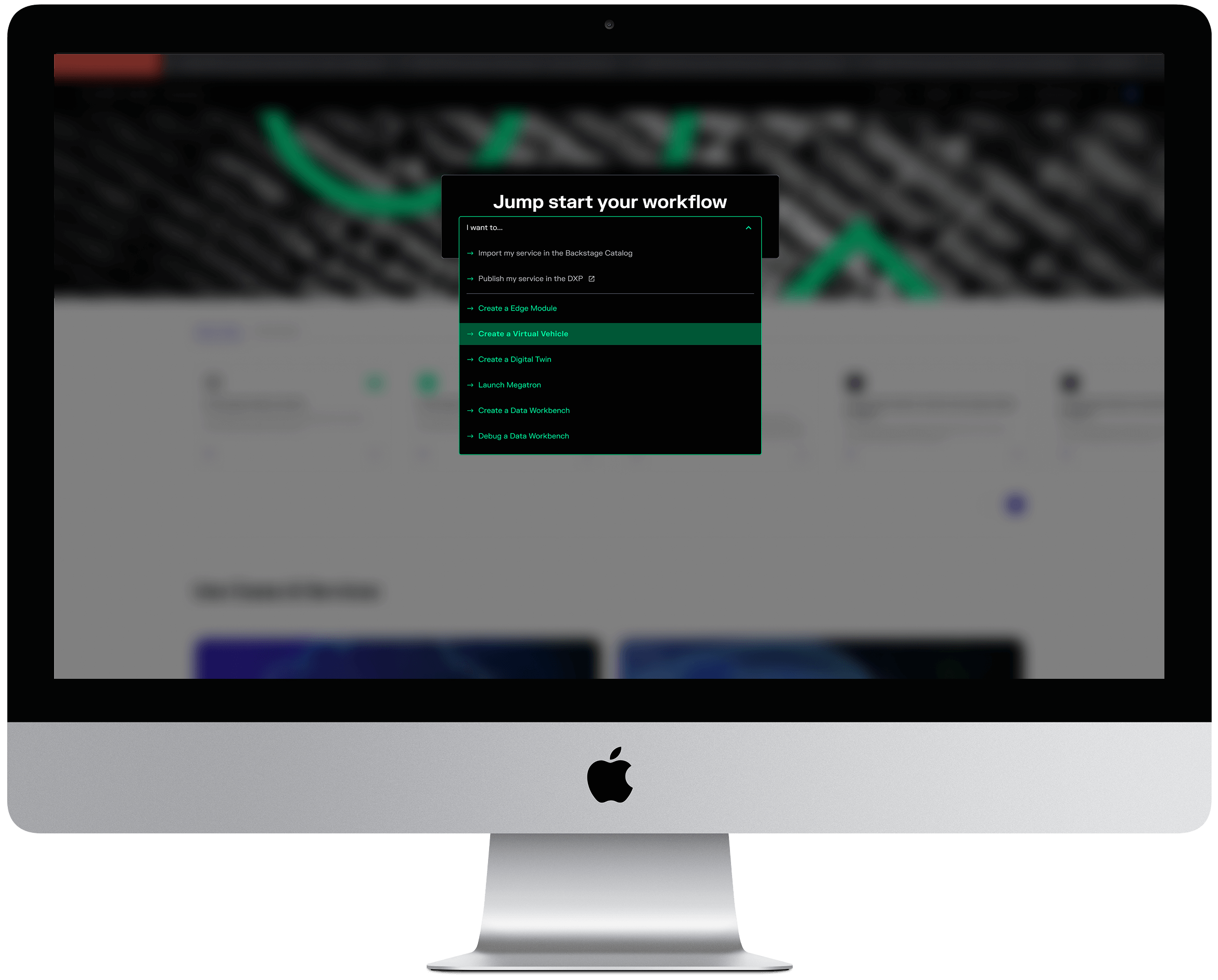
One of the most contested decisions was what should live on the homepage. Stakeholders pushed for a feature-rich experience: developer profiles, top contributors, a broad content surface. Our research told a different story.
Developers are time-bound and goal-oriented. They arrive knowing what they need, and anything that slows that path creates friction.
We made the call to prioritize a single interaction, a "Jump Start Your Workflow" dropdown that let engineers navigate directly to their category of choice in one click. It respected their time, reduced cognitive load on arrival, and freed up the rest of the page to surface secondary content without competing for attention. This focus on time efficiency was a direct contributor to the 87% user adoption rate achieved in the first six months.

WHO WE WERE BUILDING FOR
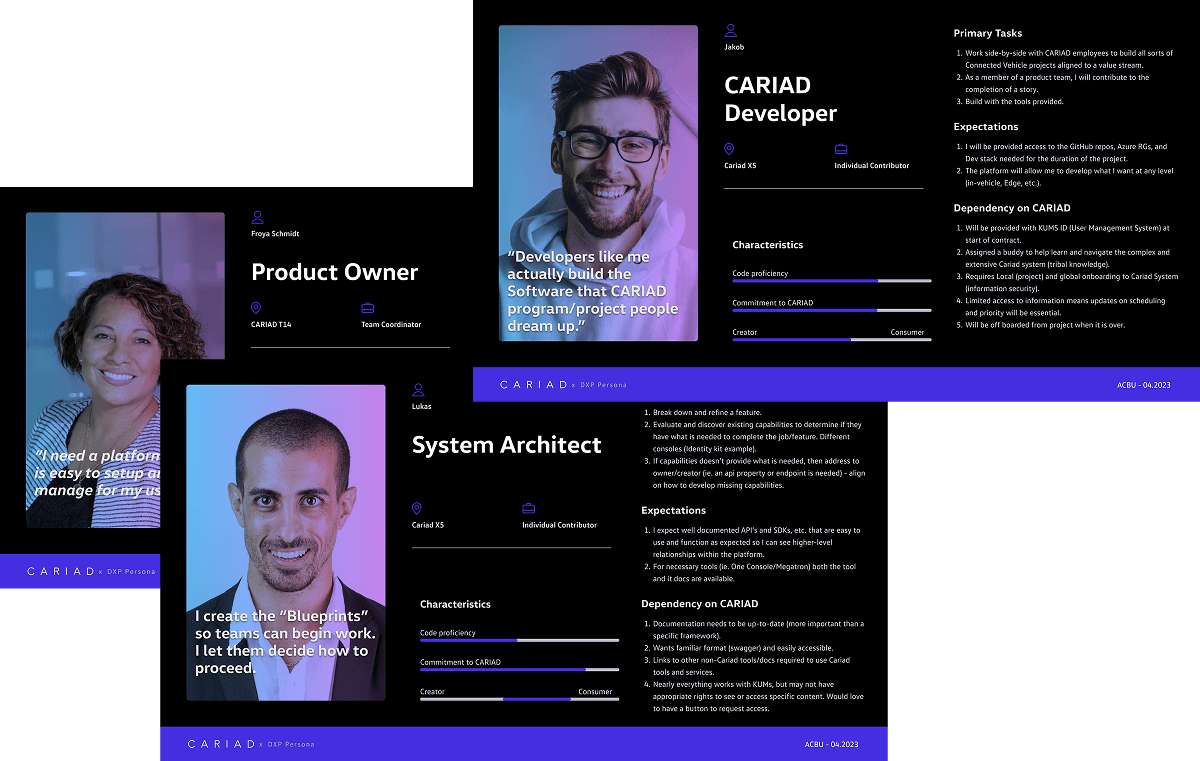
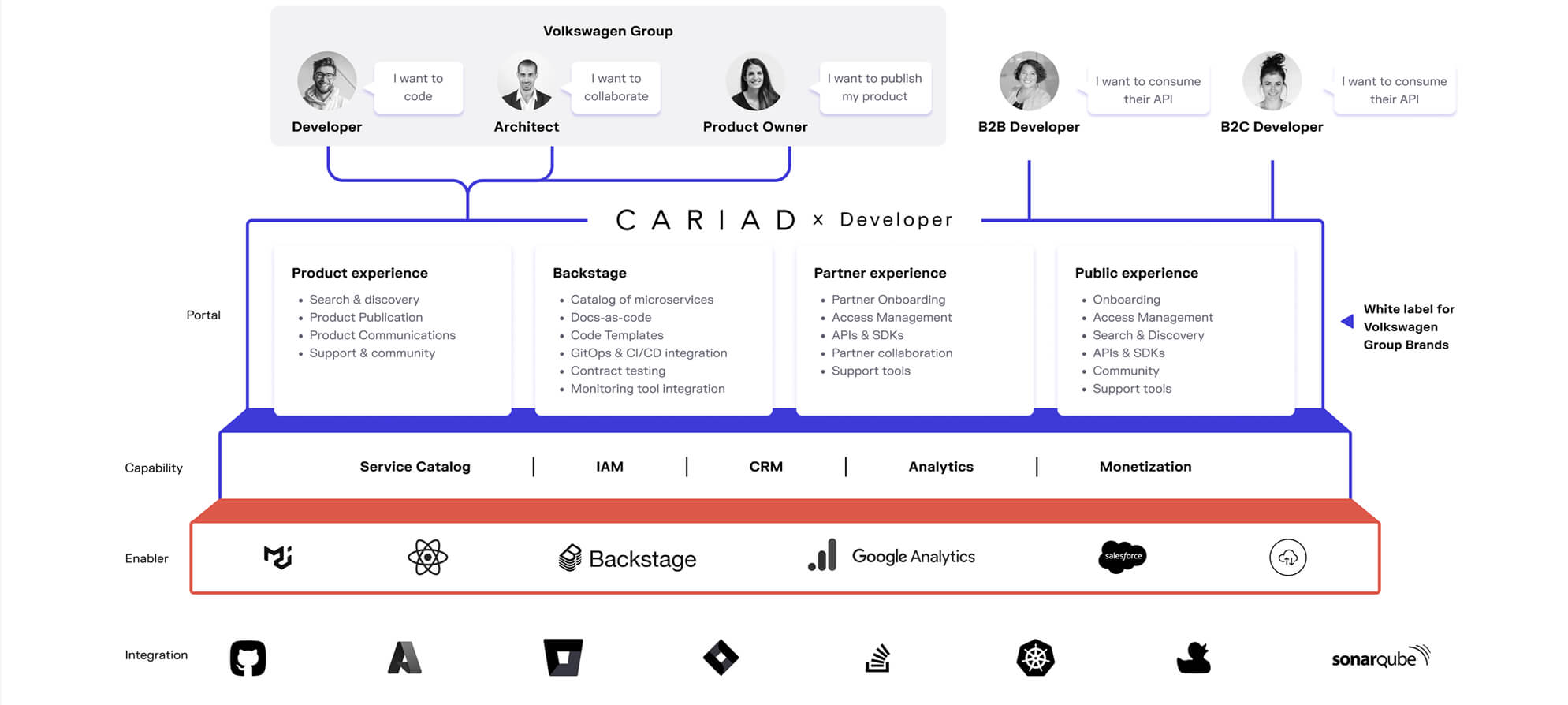
Multiple personas. One Coherent experience.
While several user types would ultimately benefit from the portal, we focused the MVP around the developer experience. The full persona map included internal developers and architects building features, product owners publishing documentation, B2B partner developers consuming APIs externally, and senior leadership needing operational visibility. Each had different mental models, different entry points, and different definitions of success — and the architecture had to serve all of them without overwhelming any of them.
USER FLOWS & WIREFRAMES
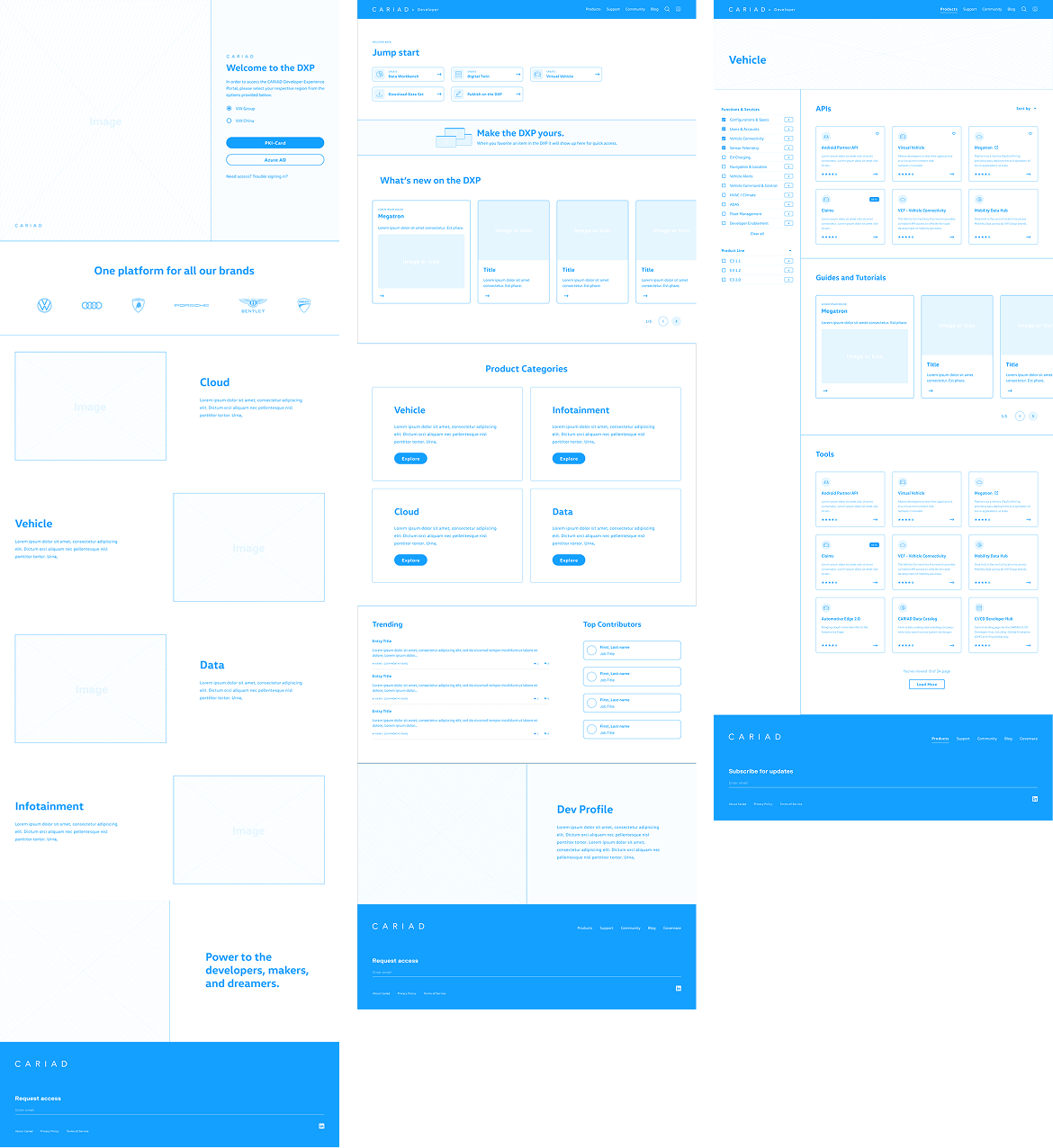
Three critical journeys mapped end to end.
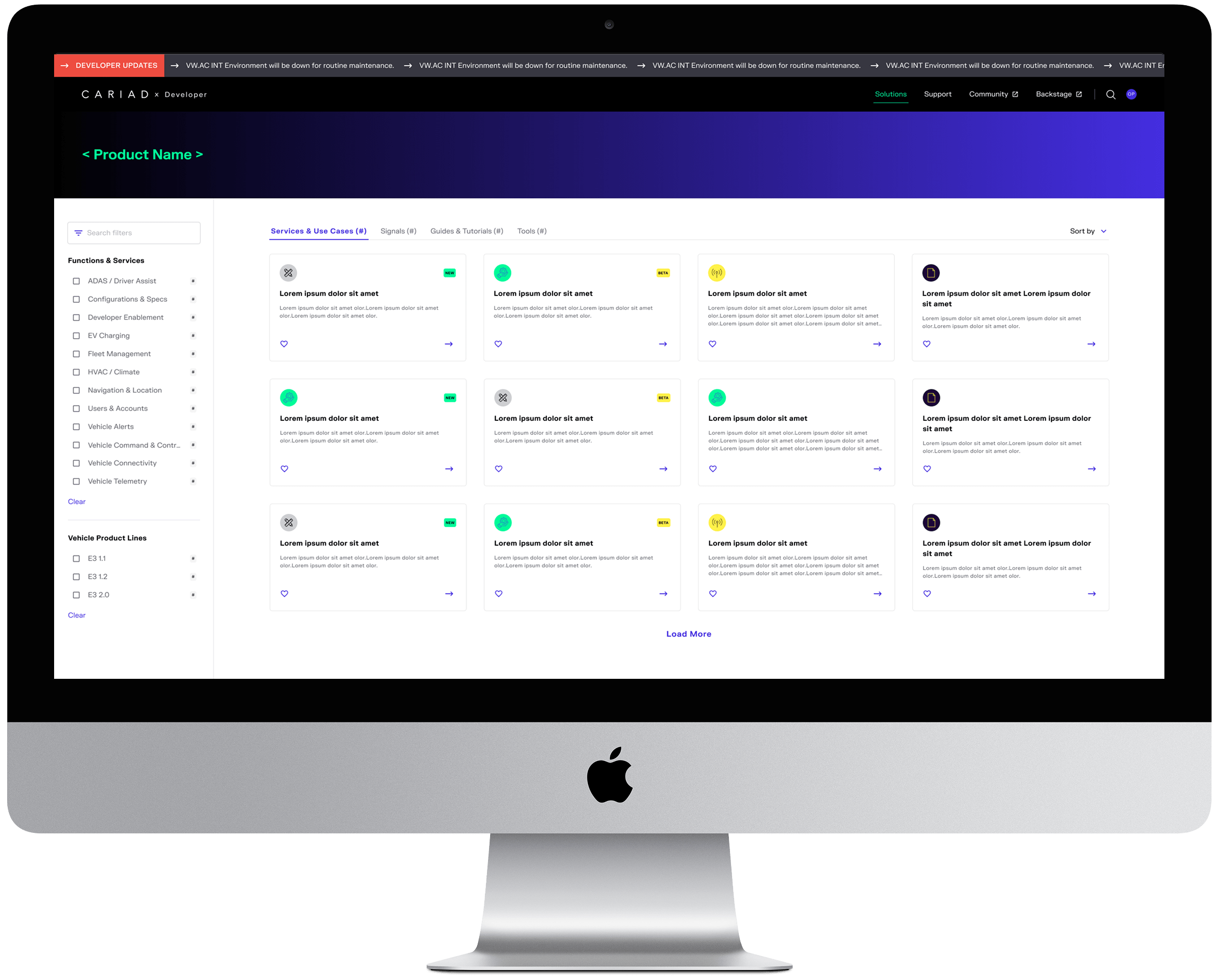
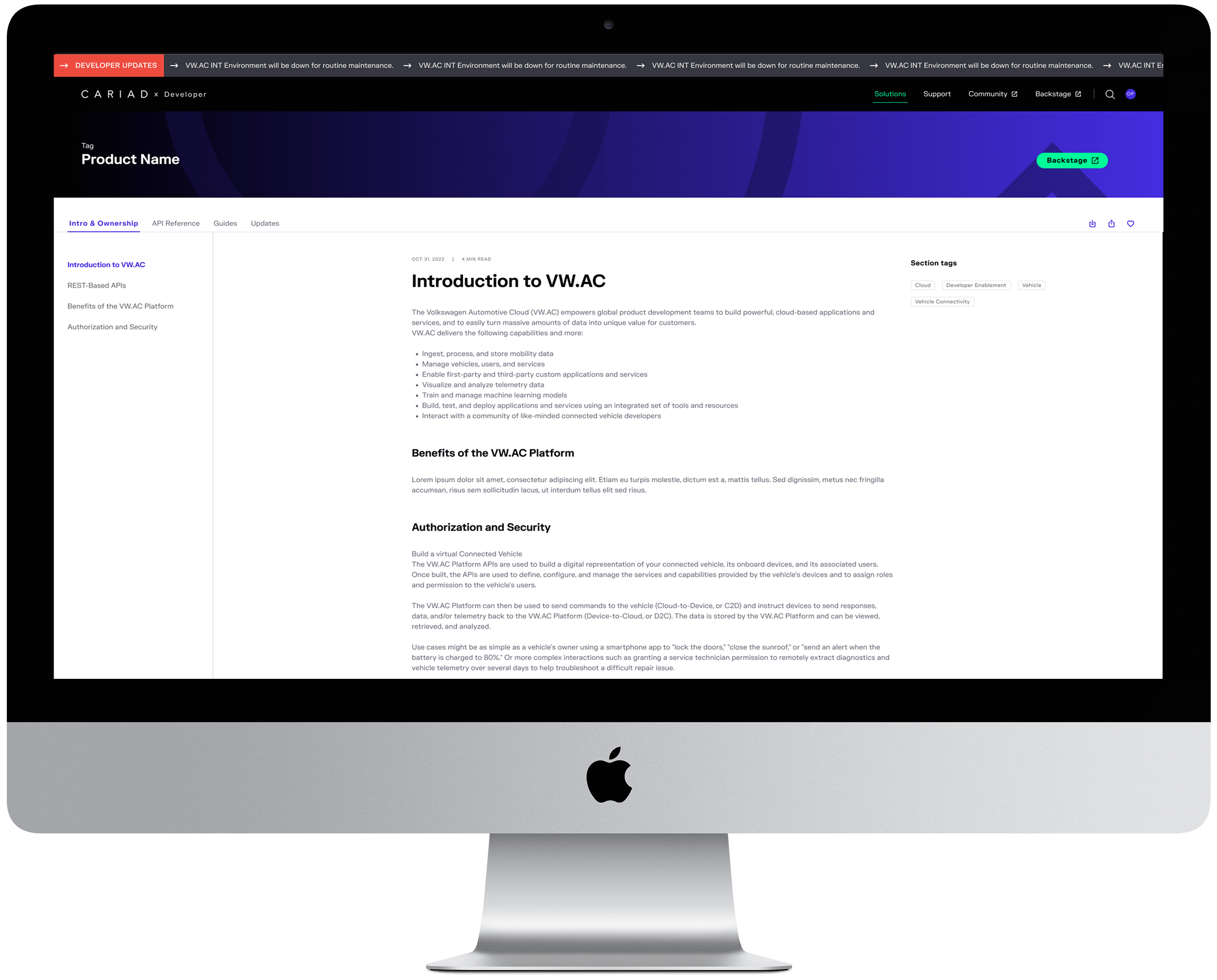
To understand how developers would interact with the platform, I mapped key user flows to surface essential actions and pain points across onboarding, API discovery, and documentation navigation. These flows shaped both low- and high-fidelity wireframes and directly influenced layout decisions that simplified navigation and task completion. Two rounds of usability testing: one in the U.S., one with German teams, validated the architecture before a single line of production code was written.
SCOPE & TRADEOFFS
Knowing what to cut was as important as knowing what to build.
Not every feature made it to launch.
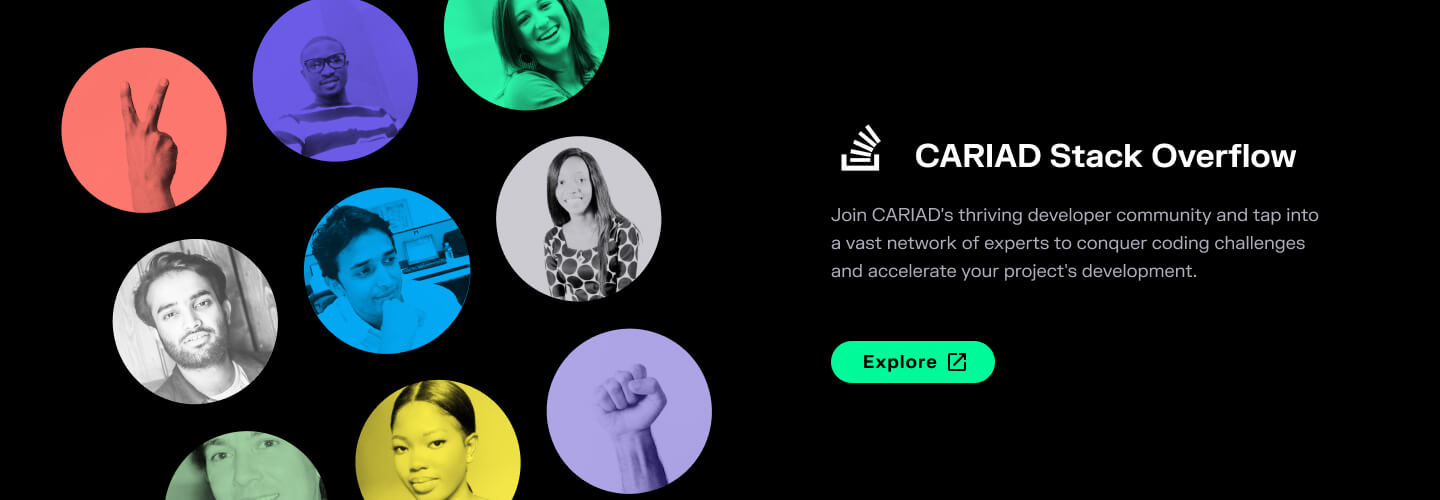
An internally built developer directory was scoped out due to the complexity, resources, and timeline required to execute it properly. Rather than cut the need entirely, we made a pragmatic pivot: linking out to Stack Overflow, where CARIAD developers were already active, and creating a CARIAD-specific section within it. It preserved the intent of the feature without the overhead.
A developer profiles editorial section was also moved to the backlog. Sourcing the right developers to profile required proximity to CARIAD's Wolfsburg headquarters, and the copy and photography resources needed to do it well were not available to our team at the time. The decision was documented and left open for a future phase when those resources could be properly allocated.
Both calls kept the project on track and protected the core developer experience from scope creep.
DESIGN SYSTEM
The first standardized brand system CARIAD had ever built
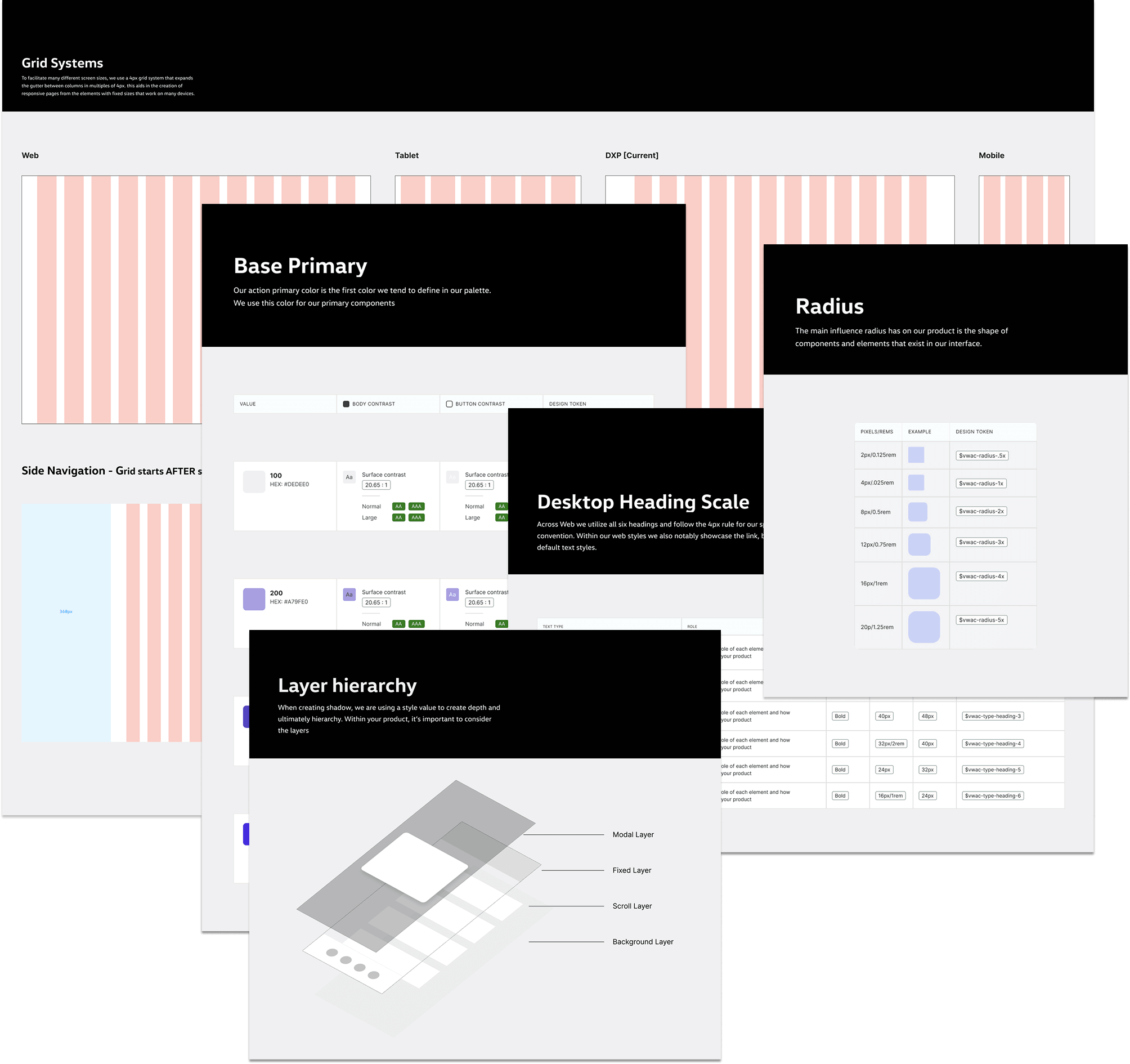
The portal was built on a fully componentized design system comprising approximately 60 components covering every element of the interface. This was the first internally standardized brand system created for CARIAD: establishing a visual and interaction foundation that had never existed across the organization before. The system was handed off to executive-level design engineering managers at CARIAD's Wolfsburg headquarters, where it remains in active use today. Its consistency and scalability directly contributed to the adoption and productivity gains reflected in the outcomes below.
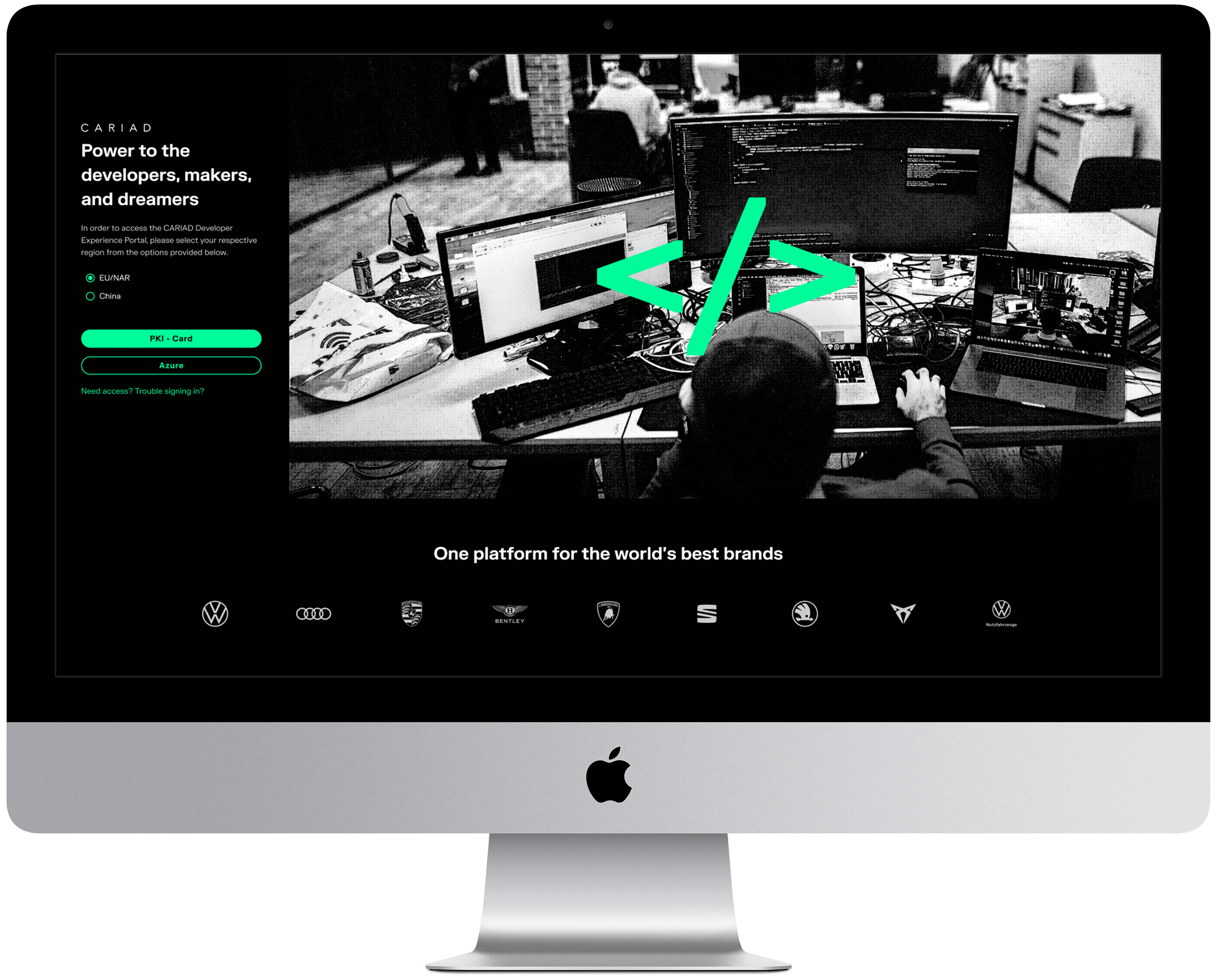
Developer Portal
OUTCOMES & IMPACT
From fragmented to foundational
The portal reached full production and scaled to 3,890 registrations within six months: 87% of the total target user base. Developer satisfaction jumped from 2.1 to 4.6 out of 5. What began as a Redmond side project became the operational backbone of software development across The Volkswagen Group, and was adopted as the template for other Volkswagen digital initiatives.
3,890
Registrations– 6 months
14→2 days
Onboarding reduction time
$2.3M
Est. annual savings in tool licensing
98%
Faster build times
“What began as a fragmented developer experience became the operational backbone of software development across the Volkswagen Group.”
Carried Forward
Design system patterns carried forward as the first standardized CARIAD brand framework, now maintained by engineering leadership in Wolfsburg • Cross-continental research model informed how later distributed projects were structured • "Jump Start Your Workflow" interaction pattern became a reference for developer-facing tools across the VW Group • Demonstrated measurable business value of UX investment at enterprise scale
© David Fite 2026
© 2026 David Fite